
Research · Essay No. 1
The 2 sigma problem.
One-to-one tutoring can lift the average student above 98% of a normal classroom. Benjamin Bloom measured it in 1984, and noted it was too costly to give to every student.

In 1984, the educational psychologist Benjamin S. Bloom published a short paper with an outsized finding.1
Students taught one-to-one, using mastery learning, performed about two standard deviations better than students in an ordinary one-teacher-to-thirty classroom. The average tutored student ended up above roughly 98 percent of the conventional class, an effect rarely seen in education research.
There was a catch. A private tutor for every child is far too expensive to provide at scale. So Bloom named the real challenge of finding a group method of instruction as effective as one-to-one tutoring: the "2 sigma problem." It's stayed open ever since.
The 2 Sigma Problem: The Search for Methods of Group Instruction as Effective as One-to-One Tutoring
Benjamin S. Bloom
The University of Chicago
Abstract — Under one-to-one tutoring with mastery learning, the average student performed about two standard deviations above the average of a conventional class of thirty — better than 98 percent of those students. Because individual tutoring cannot practically be provided to every learner, the problem set here is to find group methods of instruction that approach the same effect.
Built to close the gap
How Sophie is built to solve it.
Sophie takes Bloom's blueprint, one-to-one mastery-based tutoring, and does the one thing he couldn't: make it affordable for everyone.

One-to-one, on the real paper
What Bloom's tutors had was sight of one student's own reasoning, corrected on the spot. Sophie reads your child's own paper during the session, so a wrong turn gets caught right away, not a week later on a returned test.

Mastery before moving on
The other half of Bloom's result was mastery learning: check, correct, and don't advance until the idea holds. Sophie tracks every concept your child has actually mastered and circles back to the shaky ones, instead of marching through a syllabus on schedule.
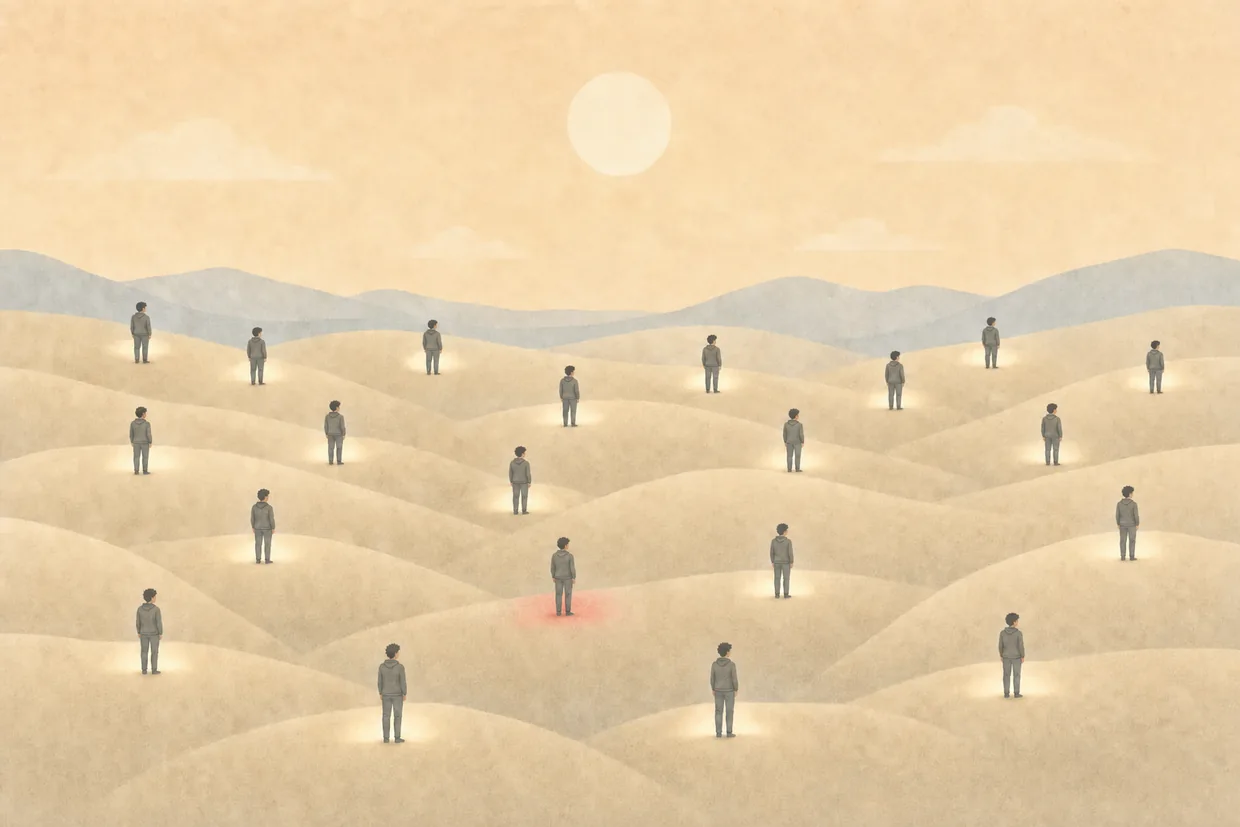
Scale Bloom couldn't reach
Sophie makes this level of attention affordable and always on. A personal tutor within reach of every family, not only the few who could hire one.
The gap, closing
Sophie is built to solve the 2 sigma problem: a personal tutor for every family.
We're early, and don't yet claim a measured 2σ result. Closing that gap, for every child and not only the fortunate few, is what Sophie is built to do.
References
- Bloom, B. S. (1984). The 2 sigma problem: The search for methods of group instruction as effective as one-to-one tutoring. Educational Researcher, 13(6), 4-16.
- VanLehn, K. (2011). The relative effectiveness of human tutoring, intelligent tutoring systems, and other tutoring systems. Educational Psychologist, 46(4), 197-221.